Elemento #5
What is BPP?
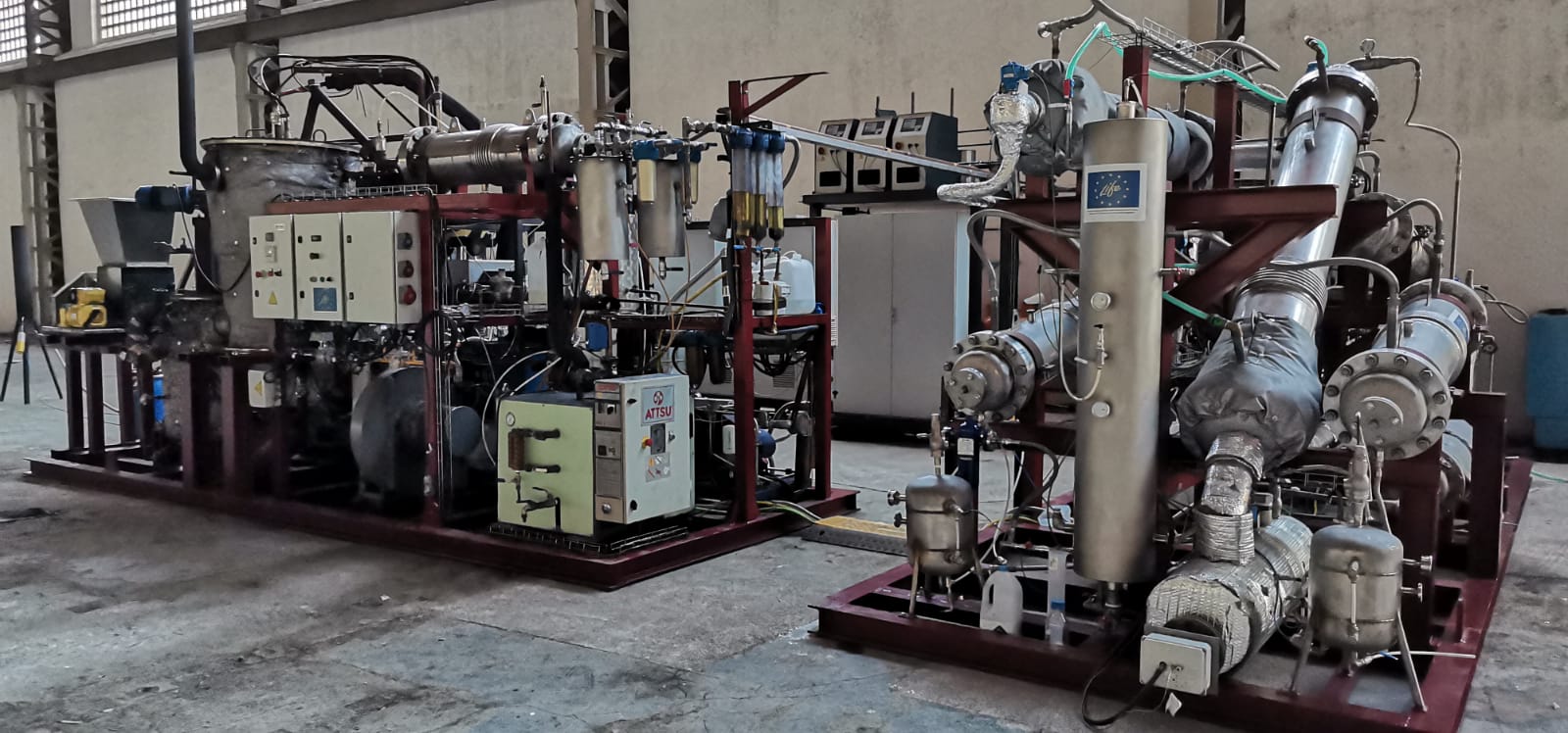
BluePlasma Power is a deep-tech SME that has developed proprietary technology to process the difficult waste that remains after municipalities and waste operators have already sorted and treated it. This residual waste is mixed, contaminated, and typically non-recyclable, so it is often landfilled, incinerated, or sent elsewhere for disposal. As a result, it creates recurring costs, consumes land, and increases regulatory pressure. Our solution addresses this problem by converting difficult municipal residual waste on site, ideally at or next to municipal waste centres, into hydrogen-rich syngas. This gas is the core output of the system and a key value-bearing intermediate, enabling downstream monetisation pathways while providing a credible local alternative to disposal.
What is BPP?
BluePlasma Power is a deep-tech SME that has developed proprietary technology to process the difficult waste that remains after municipalities and waste operators have already sorted and treated it. This residual waste is mixed, contaminated, and typically non-recyclable, so it is often landfilled, incinerated, or sent elsewhere for disposal. As a result, it creates recurring costs, consumes land, and increases regulatory pressure. Our solution addresses this problem by converting difficult municipal residual waste on site, ideally at or next to municipal waste centres, into hydrogen-rich syngas. This gas is the core output of the system and a key value-bearing intermediate, enabling downstream monetisation pathways while providing a credible local alternative to disposal.
Therefore we solve 2 main problems:
1) Circularity: Not only we do avoid the landfilling and the high economic cost of having to manage the waste, but we also obtain a valuable product from it on the market (advanced methanol and derivates like formaline) at a cost that allows it to compete with fossil products.
2) Decarbonization: By reducing fossil energy consumption with Zero CO2 emissions.
Our key Unique Selling Propositions are six. First, our solution is designed for difficult municipal residual waste, not just difficult waste in general and not just cleaner industrial waste streams. Second, it is designed for compact modular deployment at or near municipal waste centres, where the problem already exists. Third, it converts this waste into hydrogen-rich syngas, with demonstrated samples showing around 50% to 55% hydrogen. Fourth, it uses a compact modular plant design suited to distributed deployment rather than only large centralized plants. Fifth, it creates a usable intermediate gas that opens downstream value pathways without making the core innovation depend on a standard end-product claim. Sixth, the business model is attractive because municipalities or waste operators provide access to the difficult waste stream, while BluePlasma Power creates value by converting it into a higher-value intermediate and reducing dependence on landfill and external disposal routes.